

Violent dispossession in Tasmania
1830: The ‘Black Line’ — settler force attempts to corral First Nations people onto the Tasman Peninsula
Violent dispossession in Tasmania
1830: The ‘Black Line’ — settler force attempts to corral First Nations people onto the Tasman Peninsula
 WL Crowther Library, Tasmanian Archive and Heritage Office, SD_ILS:994395
WARNING: This page contains some difficult and potentially distressing content.
In a snapshot
Relations between First Nations people and European colonisers were hostile from the first recorded contact on the island that would become known as Tasmania. By 1830 a war-like state existed across the island. The British Lieutenant-Governor responded by creating the ‘Black Line’, a military campaign involving a human chain designed to move all surviving Aboriginal Tasmanians to the Tasman Peninsula. While the campaign did not succeed at first, the devastating effect of colonisation on First Nations people ultimately allowed Europeans to take control of the region.
 Can you find out?
1. How long after Europeans arrived in 1788 did the Black Line begin?
2. About how many colonists joined in the Black Line? Did they outnumber the First Nations people at this time?
3. How did Governor Arthur justify the use of the Black Line?
What was life like before European colonisation?
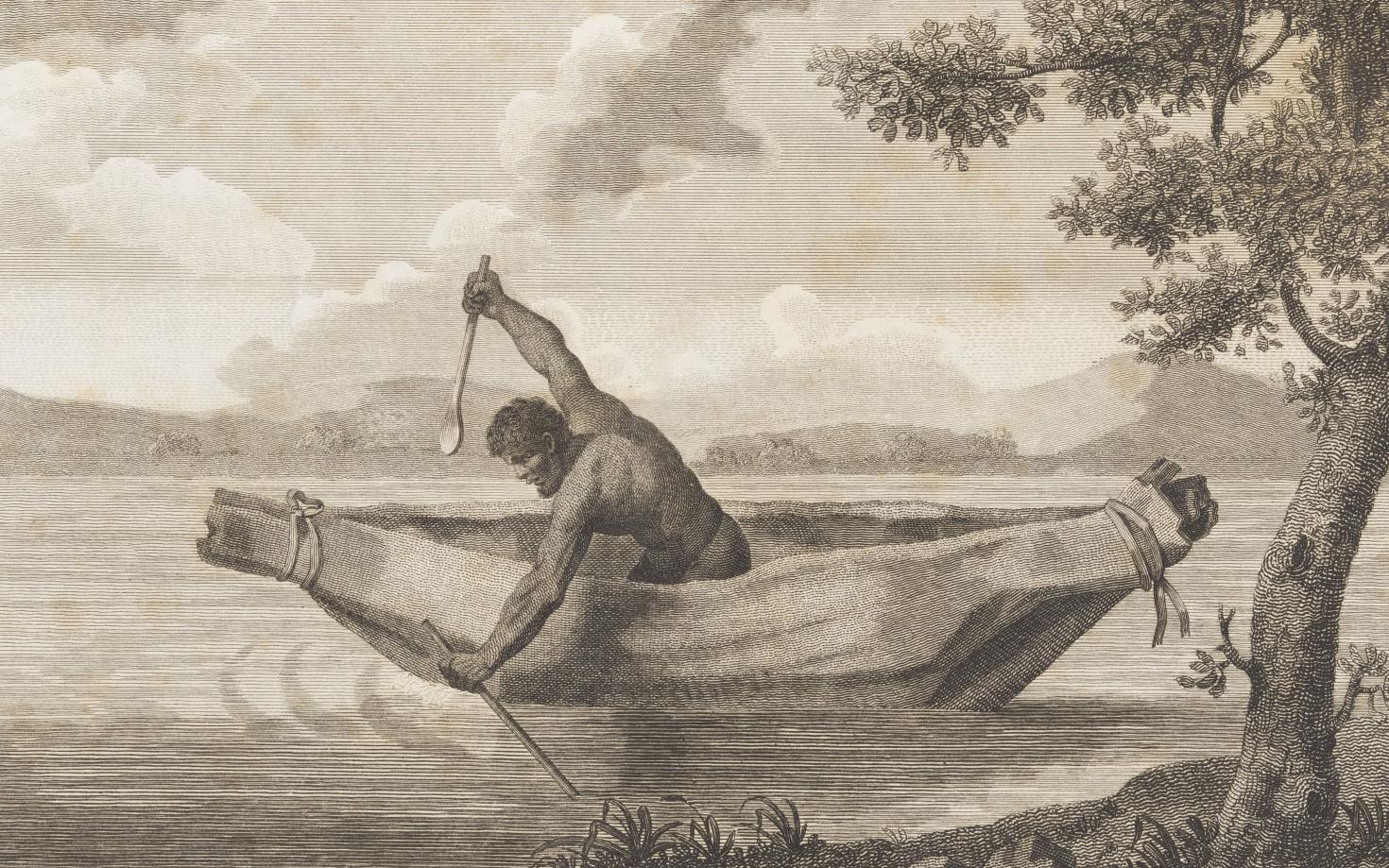
Around 40,000 years ago First Nations people settled the island they called Lutruwita/Trouwerner by migrating from mainland Australia on a land bridge. This land bridge later permanently flooded, cutting them off from the mainland and creating what is now called the Bass Strait.
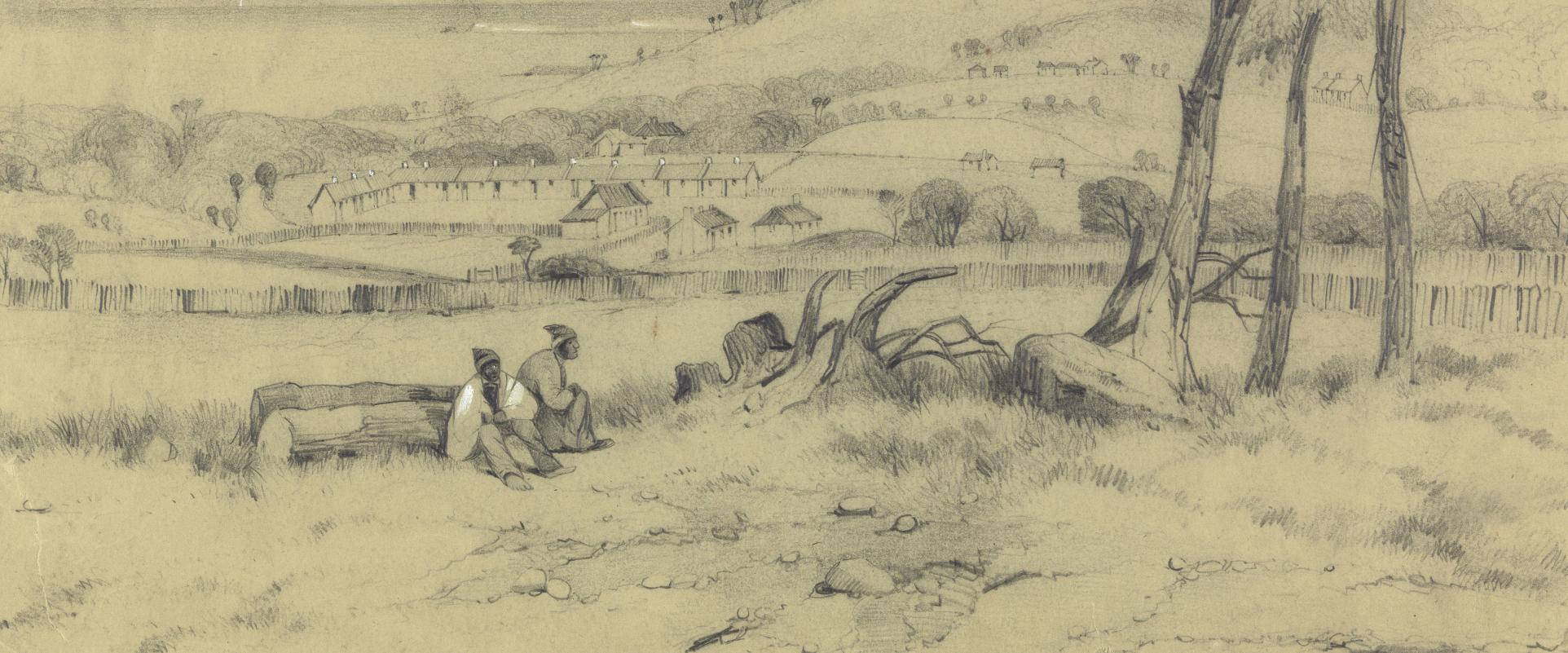
There were up to 15,000 Aboriginal people living on Lutruwita/Trouwerner when the First Fleet arrived in Sydney in 1788. They lived off the island’s many resources, especially its great hunting grounds and fresh waters.

National Library of Australia an23182428
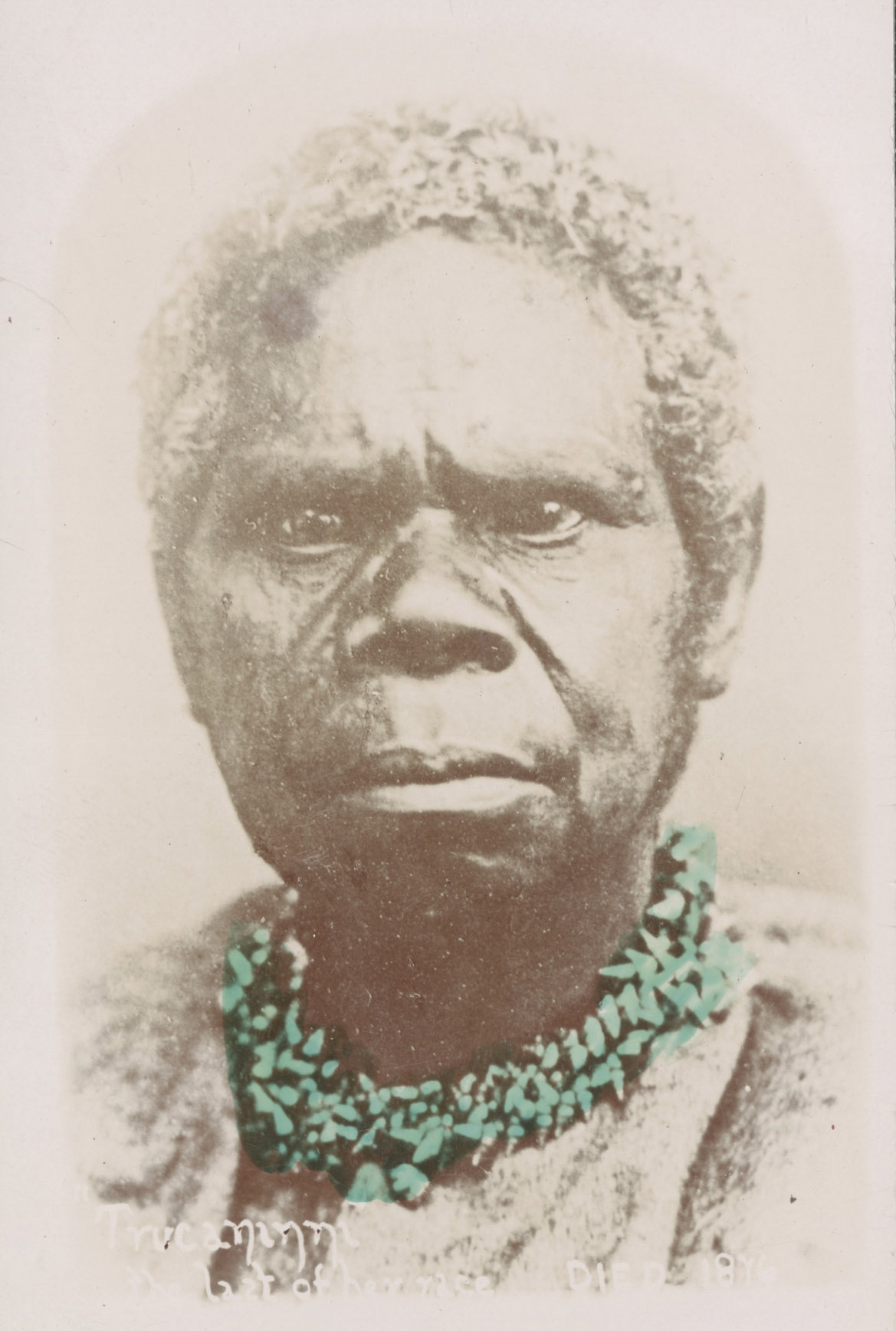
When did the British arrive on the island?
In the early 1800s, British colonists and convicts established a settlement on the island known to them as Van Diemen’s Land (later Tasmania). At first they numbered fewer than 3,000 people and mostly comprised military personnel and convicts, along with a small number of free settlers. But by 1830 this number had increased to about 23,500.
Nearly one million sheep accompanied the colonists. They occupied the best grazing land, detrimentally impacting the local environment and the many food and water sources used by First Nations people. Aboriginal people also suffered as a result of introduced European diseases and violence from the colonists. By 1818 their number had dropped to less than 2,000.
As the British population grew conflict with the First Nations population increased. Many Aboriginal women and children were kidnapped, and in about 1824 the violent Black War began as colonists drove Aboriginal communities from their lands, murdering many in the process. In response Aboriginal warriors attacked and killed colonists, sometimes using guerrilla warfare tactics to defend themselves.


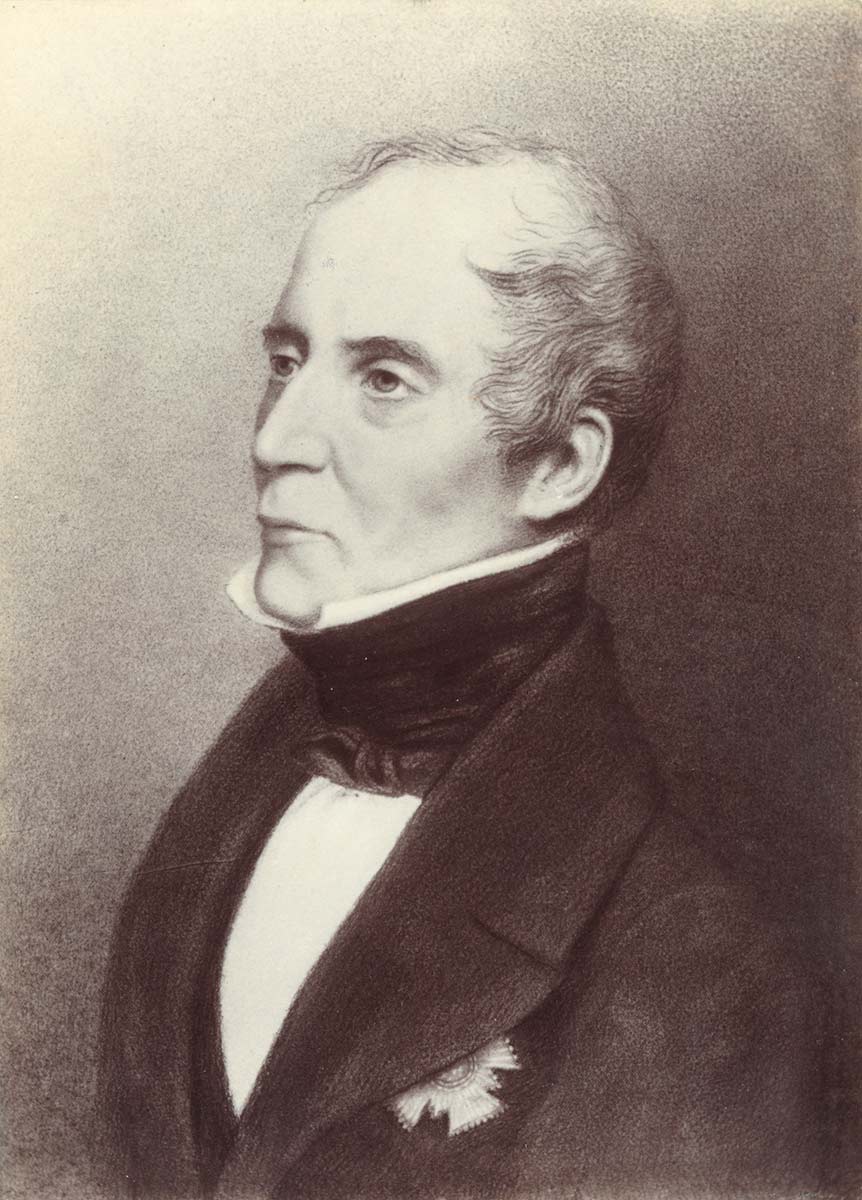
What was the Black Line?
Soon after becoming Lieutenant Governor of Van Diemen’s Land in 1824, George Arthur made it a crime to resist British colonisation. He allowed soldiers and police to raid Aboriginal camps and take prisoners for almost any reason. As the fighting and resistance continued, Arthur suspended ordinary law and declared martial law, which led to First Nations people being considered ‘open enemies’ of the colony. This gave Aboriginal people few protections, even though the famous Arthur’s ‘Proclamation to the Aborigines’ seemed to promise a fairer approach.
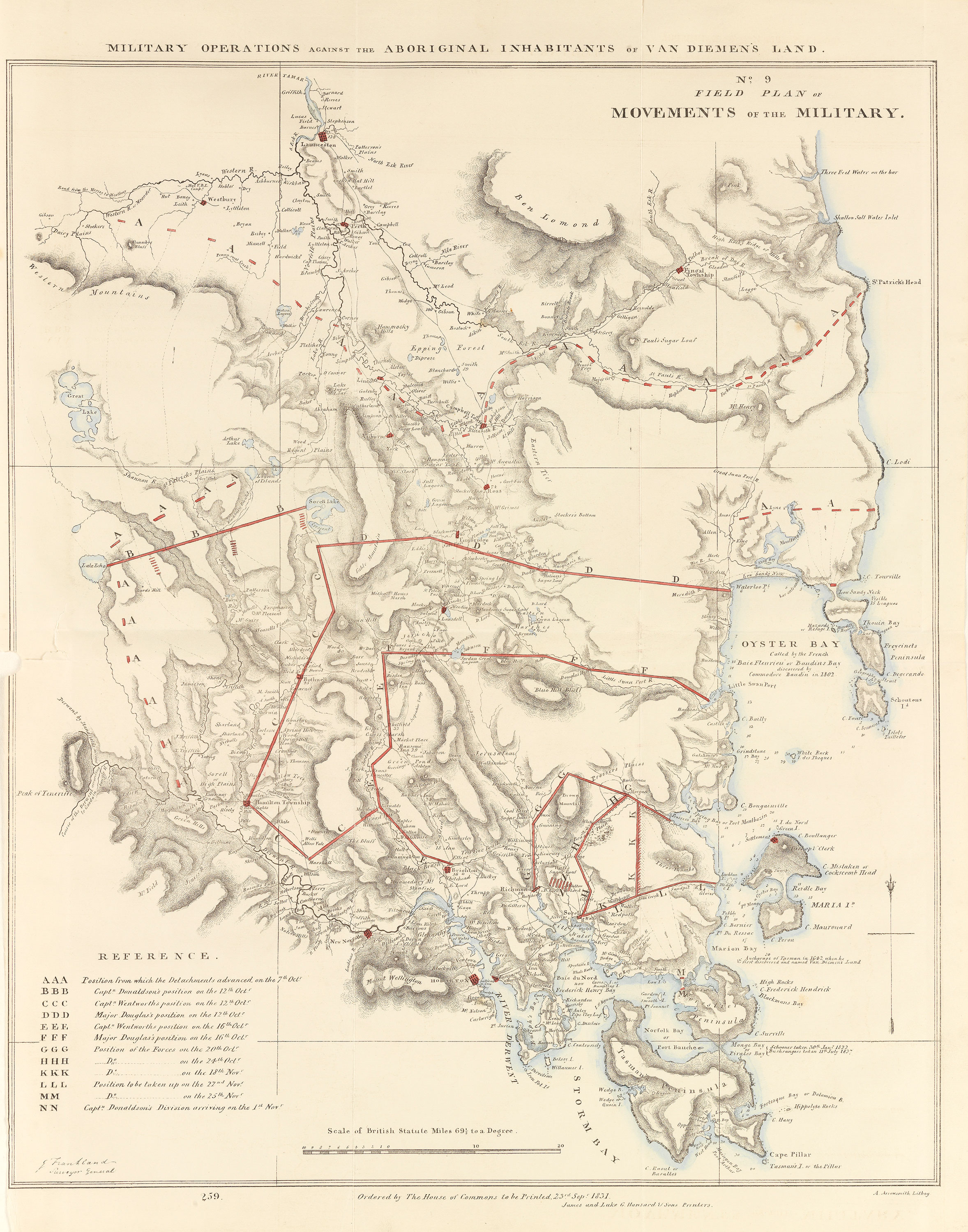
Governor Arthur then used the ‘Black Line’ to try to force the remaining First Nations people onto the Tasman Peninsula. On 7 October 1830 more than 2,200 free settlers, military, police and convicts formed a human chain and moved across the landscape to remove the remaining Aboriginal people. It was the largest force ever brought together against Aboriginal people anywhere in Australia, and made up of about 10 per cent of Tasmania’s population.
The Black Line was not immediately successful, with only two First Nations people being reported as captured. But the campaign worried those who had escaped, many later surrendering to the colonists. Around 200 First Nations people were removed to Flinders Island in Bass Strait, where many died from the extremely poor living conditions.
Although a huge number of First Nations people died up to and during the Black War, today many thousands of people in Tasmania identify as Aboriginal and/or Torres Strait Islander (in the 2021 census). Many keep up their traditional culture, traditions and language, and practise traditional skills such as basket weaving, necklace making and mutton birding.
Read a longer version of this Defining Moment on the National Museum of Australia’s website.
Research task
What were the main events and conflicts that took place during the Black War? Who were some of the main First Nations and European leaders involved in the war? About how many people (Aboriginal and European) died during the war?
What did you learn?
1. How long after Europeans arrived in 1788 did the Black Line begin?
2. About how many colonists joined in the Black Line? Did they outnumber the First Nations people at this time?
3. How did Governor Arthur justify the use of the Black Line?